


 Contact Support
 Sign In
Print on demand (POD) is one of the simplest ways to start selling products online. Instead of buying stock in advance and worrying about whether it sells, you only make the product when someone places an order. That means less risk, no leftover inventory, and a smoother start for your business.
What makes POD great is that you don’t have to deal with shipping. Once a customer places an order, your print provider handles the printing, packing, and delivery. This frees you so you can focus on what really matters: creating great designs, building your brand, and reaching the right audience.
This guide shows you how to build a website and start a print on demand business from scratch. You’ll learn how to choose a niche, decide on products, create designs, setup your store, and price everything correctly.
We also cover how to market your products, provide excellent customer service, and track your results. You’ll find answers to the most common questions about how to start a print on demand business and run it successfully.
KEY TAKEAWAYS
- Print on demand is a low-risk way to sell online, since you don’t need to buy or store inventory.
- Select a clear niche to stand out, target the right audience, and establish a loyal customer base.
- Product selection should suit your niche and brand promise, with options including everything from apparel to home goods.
- Strong designs are at the core of success, and you can create them yourself, use licensed assets, or hire a designer.
- Choose a reliable print provider that ensures good quality, fast shipping, and handles orders smoothly.
- A professional website or landing page builds trust and gives you full control over branding and customer experience.
- Pricing must cover costs, offer fair value to customers, and leave enough margin for profit.
- Marketing starts best with organic efforts, then scales with paid ads once you know what works.
- Good customer service builds trust, encourages repeat sales and strengthens your brand image.
- Track KPIs, including traffic, conversion rate, order value, and return rate, to improve and grow your store.
TABLE OF CONTENTS
How to Start a Print on Demand Business
Here are the steps to start a print on demand business and grow. From building your brand to attracting customers, each step is designed to guide you through the process of turning your ideas into real products. Here’s what we’ll cover:
- Choosing your niche.
- Deciding what to sell.
- Creating your designs.
- Selecting a print provider.
- Setting up your POD business website or landing page.
- Pricing your products.
- Marketing your products.
- Providing excellent customer service.
- Monitoring your POD store’s performance.
By following these steps, you’ll be ready to build a business that’s low-risk, scalable, and full of growth potential. Let’s start with the first step below.
Step 1: Choose Your Niche
Before you start designing products, you need to decide on your niche, a focused area or theme that defines who you’re selling to and what kind of products you will offer.
Selecting a niche helps you target the right audience, craft messages that speak directly to them, and stand out in a crowded market. Over time, this focus can also help you build a loyal customer base that keeps returning.
Once you have a few ideas in mind, it’s time to check if there’s real demand. To do this:
- Begin by scanning social media platforms to see what people are talking about and which hashtags are trending.
- Tools like Google Trendscan show you how interest in a specific topic will change over time.
- Keyword research is another powerful step because it shows you how often people search for specific products and how much competition you’ll face.
- To finish your research, consider online marketplaces to see which items are selling well currently.
Research is only the first step. You also need to validate your idea before investing too much time or money. Simple methods, such as running quick polls, asking questions in community groups, or sharing mockups of your designs, can provide early feedback. This feedback shows whether your idea connects with your target audience or if you should adjust it.
Profit potential is another key factor. Take time to estimate your production costs, the average sale price you can charge, and what kind of margins you’ll make. If the numbers look too tight, it may not be the right niche to pursue.
If you’re unsure where to begin, here are some popular niche ideas to spark inspiration:
- Fitness and health.
- Pets.
- Hobbies.
- Professions.
- Lifestyle and culture.
Choosing the right niche is the foundation when you start a print on demand business. The more focused you are, the easier it becomes to design products, market them effectively, and grow your brand.
Step 2: Decide What to Sell
Once you’ve chosen your niche, the next step is deciding which products to offer. The items you sell should suit your niche, so your store feels consistent and trustworthy. For example, if your niche is fitness, selling workout shirts and gym bags makes more sense than selling random phone cases.
This is important because staying focused makes your shop look professional and helps customers understand your brand right away.
It’s also worth considering sustainable options. Many buyers today prefer eco-friendly products, so if your brand values align with that, consider items made from organic fabrics or recycled materials. This can set you apart from competitors and attract an audience that cares about the environment.
Here are some common print on demand products you can start with:
- T-shirts and hoodies: Always popular, easy to design, and available in many styles. The downside is that competition is high, so you’ll need unique designs.
- Phone cases and mugs: Small items that make great gifts. They’re simple to produce but often have smaller profit margins.
- Tote bags and leggings: Useful, stylish, and practical. Fabric quality is important here, so always check samples before selling.
- Posters and art prints: A great choice if your designs are visually strong. They can be printed in different sizes, but shipping larger prints safely can be tricky.
When deciding what to sell, keep one thing in mind: each product type comes with pros and cons, and print methods can also differ.
For clothing, direct-to-garment (DTG) printing offers high-quality detail, while screen printing works better for bulk orders. For mugs or phone cases, sublimation printing is popular, as it bonds the design firmly to the surface. Checking these details early helps you avoid surprises later.
Once you select your products, it’s time to create designs.
Step 3: Create Your Designs
The heart of a print on demand business is the design. A strong design can turn a simple T-shirt, mug, or poster into something customers want to buy. The good news is that there are different ways to create designs, and you don’t have to be a professional artist to get started.
One option is the DIY path. If you’ve got some creative skills, you can use Canva, Photoshop, or Illustrator to design your own graphics. This gives you full control over the design and makes your store original.
If design isn’t your strength, you can use premade assets. Legal marketplaces offer ready-to-use templates, illustrations, and fonts that you can customize. This approach saves time; however, always ensure the license allows you to use the design for commercial products.
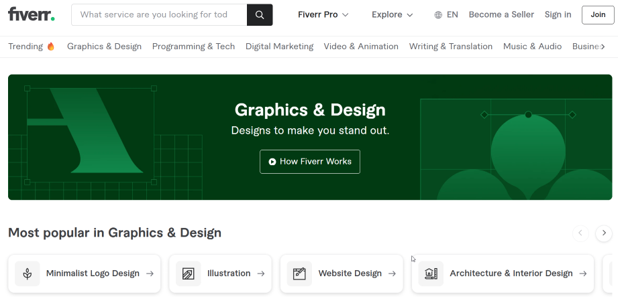
Another route is hiring a freelance designer. This can be the best choice if you want unique, branded visuals that fit a long-term business strategy. A designer can help you create a consistent style that makes your store memorable.
You can find professional talent from various freelance marketplaces, including Fiverr, Upwork, and Freelancer.
Before you launch, it’s smart to validate your designs. Share mockups on social media, run small polls, or ask focus groups for honest feedback. You can even do a soft launch by selling a limited batch to test if people are willing to pay for your designs.
Also, legal checks are just as important as creativity. Always avoid using trademarks, logos, or copyrighted material that doesn’t belong to you. Confirm that you have the proper rights for any fonts, graphics, or stock images you use. It’s also a good idea to keep proof of licenses and permissions in case questions arise later.
By combining creativity, feedback, and legal safety, you’ll create designs that look good and sell well.
Step 4: Choose a Print Provider
When you start a print on demand business, your print provider is the backbone. They handle the printing, packaging, and shipping of every order, so choosing the right one is critical. Remember, a poor provider can result in late deliveries, low-quality products, and unhappy customers, all of which can quickly harm your brand.
When comparing providers, consider a few key factors:
- Start with their product range and ensure it suits the type of items you sell in your niche.
- Next, review the printing methods they use and their overall quality standards. For example, direct-to-garment (DTG) printing is great for detailed designs, while sublimation works for mugs and cases.
- Production and shipping speed also matter, especially if you want to compete with stores that promise fast delivery.
- Don’t forget about shipping costs and packaging. Some providers allow you to add branded packaging or inserts, which can make your store look more professional.
- Also, take time to read through their fees, return policies, and customer support terms.
- Finally, check if they integrate easily with your e-commerce platform, so orders flow automatically from your store to the printer.
A few popular providers you can start evaluating include:
- Printify: Known for a wide product range and multiple print partners.
- Printful: Offers high-quality printing and strong integrations with major platforms.
- Modalyst: Focuses on print on demand and various dropshipping options.
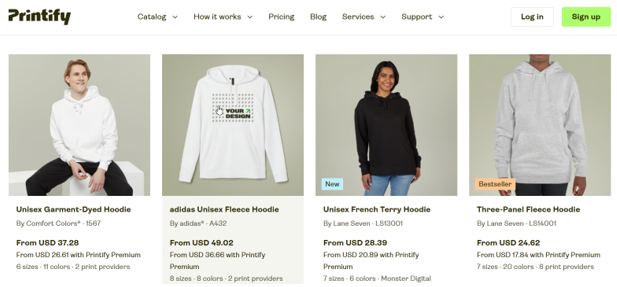
Before making a final decision, order product samples. This provides a clear idea of print quality, fabric feel, sizing accuracy, and even packaging. Reading reviews and joining POD communities is also helpful, since you’ll learn from real business owners about which providers deliver the best results.
Once you choose the right provider, it ensures your customers get products they’re happy with, while you can focus on design, branding, and marketing.
Step 5: Setup Your POD Business website or landing page
When you start a print on demand business, having your own website gives your POD store a professional edge. It’s the place where you can share your brand story, build trust, and guide visitors to act.
Unlike selling only through marketplaces, your site allows you to control the experience, clearly display product details, and explain important policies such as shipping and returns.
When setting up your POD business site, ensure you create a strong landing page that:
- Highlights your main offer with bold headlines.
- Displays clear product images.
- Keeps navigation simple so customers don’t get lost.
- Adds prominent buttons, such as Shop Now or View Collection, to motivate buyers to checkout.
- Tests personalized calls to action, since they often convert better than generic ones.
When you choose a website builder for your POD business website, look for features that save time and help with growth.
With our builder, you can easily update headlines, product descriptions, or even suggest layouts. Built-in SEO tools simplify handling basics, including titles and meta tags. Marketing integrations, such as live chat or visitor tracking, also help you connect with customers and improve sales.
Here’s a simple process to setup a print on demand online store with Hosted.com®:
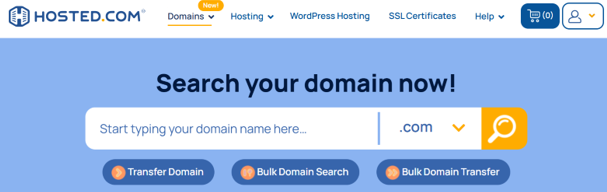
First, select a plan that matches your budget and traffic needs. Next, choose a short, memorable domain that suits your brand. Once you find it, register it.
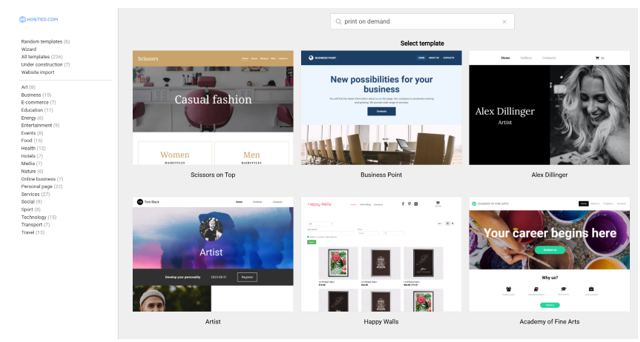
Then, complete account setup and open your website builder. Select a template that suits your niche. We provide 200+ pre-built templates that you can update according to your needs.
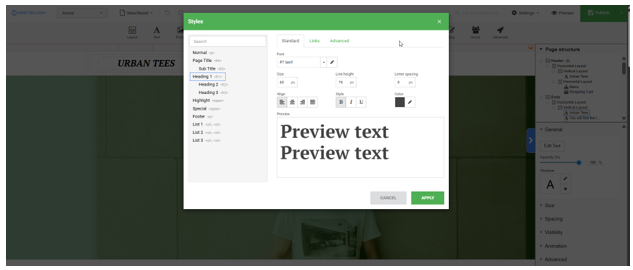
Adjust colors, fonts, and layout to create a clean, consistent look.
After that, add clear call-to-action buttons that link directly to your product pages.
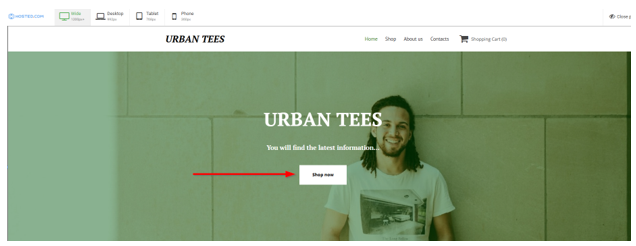
Once you’re done, preview on desktop and mobile to ensure everything looks good, then publish.
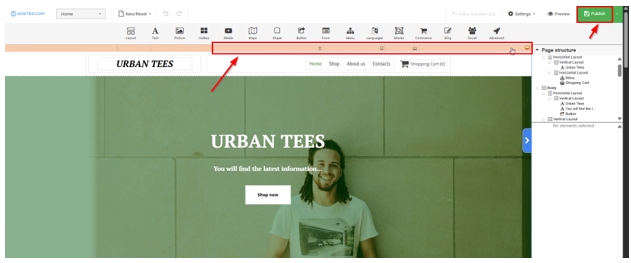
Finally, connect your store to your print provider. If you’re using Printify or Printful, link your product buttons to either the synced catalog, or to direct product URLs, depending on your platform. This ensures orders flow smoothly from your website to your provider for printing and shipping.
By setting up a professional site and landing page, you’ll not only come across as credible, but you will give visitors a clear path to becoming paying customers.
Step 6: Price Your Products
Getting your pricing right is one of the most crucial steps when you start a print on demand business with success in mind. If your prices are too low, you won’t make enough profit. If they’re too high, customers may look elsewhere. The goal is to find a balance that covers your costs, supports your growth, and still feels fair to buyers.
Here’s how you can set prices for your products:
- First, add up all the costs associated with selling a product. This includes your startup expenses, the price of samples, and early marketing costs.
- Then, factor in the production cost for each item and shipping fees. Decide whether you’ll charge customers for shipping or include it in the price. Either way, it should be clear in your policy.
Next, check what your competitors are charging for similar items. This provides a reference point, but don’t just copy their numbers. Consider your product’s uniqueness, the value of your brand, and the experience you offer. If your designs are original and your customer service is strong, you can usually charge a little more.
A simple way to stay on top of pricing is by using a spreadsheet. Track every expense, set your target profit margin, and update it regularly. This helps you adjust quickly if your costs change or if you want to test new price points.
Here’s a quick example:
If the cost of goods (COGS) is $10 and shipping is $5, your total cost is $15. To hit a 50% profit margin, you’d set the selling price at $22.50. This covers your costs while giving your business room to grow.
By setting clear, well-thought-out prices, you’ll maintain a healthy business and give your customers confidence that they’re paying a fair price.
With Hosted.com®, you can focus on your creative designs while we take care of the technical side. Enjoy easy website setup with our Website Builder, secure and reliable Web Hosting, seamless management tools, and built-in features that keep your site fast, safe, and professional.
Step 7: Market Your Products
Once you successfully start a print on demand business, it’s time to promote it so people find out about it. That’s why marketing is so important in growing your print on demand business. To do this:
- Start with organic methods to build awareness without spending much money.
- Word of mouth is a powerful tool. Encourage happy buyers to share their purchases with friends and consider offering small referral perks to reward them.
- Social media is another strong channel. Post regularly, reply to comments, and use hashtags that connect you with your niche audience.
- Content marketing also works well for POD. Share quick guides, short videos, or simple visuals that highlight your products and brand.
- Influencer outreach is another option. Send fair samples to influencers in your niche and provide clear guidelines so they know how to present your products.
- Don’t forget about email marketing. Start building a list early and send a welcome offer to new subscribers, then keep them engaged with simple launch updates or special discounts.
Once your organic marketing is steady, you can begin testing paid ads. Platforms like Facebook, Instagram, and Google make it easy to start with small budgets. Use these early tests to see which audience groups respond best, then scale up gradually.
Step 8: Provide Excellent Customer Service
Excellent customer service can turn a one-time buyer into a loyal supporter of your brand. In a print on demand business, where you don’t directly control the printing or shipping, strong communication and clear support make all the difference.
Begin with quick, clear responses. If a customer reaches out with a question or issue, reply quickly so they know the next steps, even if the full solution takes more time. Handle complaints calmly and offer fair solutions to build trust and demonstrate that you care about your customers’ experiences.
Adding personal touches also goes a long way. Use the customer’s name in emails and, when possible, mention the specific product they bought. This small detail makes your messages feel more genuine and less automated.
Ensure your website is clear. Policies for shipping, returns, and FAQs should be easy to find so customers don’t get frustrated looking for answers. Transparency helps reduce confusion and sets the right expectations before someone purchases.
Finally, follow up after an order. A simple thank-you note, or a short survey, shows that you value customer feedback. It also provides insight into what’s working and where you can improve.
Step 9: Monitor POD Store’s Performance
After you successfully start a print on demand business, it’s time to monitor your POD store’s performance. To grow steadily, you need to track how well it’s performing. This is where key performance indicators (KPIs) are essential. They show you what’s working, what’s slowing you down, and where you can improve.
To monitor the POD site’s performance:
- Check your traffic trends and sources.
- Be aware of how many visitors you have and where they come from, to see which marketing channels are worth your effort.
- Next, check your conversion rate, which is the percentage of visitors who buy.
- If your traffic is high but sales are low, there may be issues with your product pages, checkout flow, or overall design.
Additionally, pay attention to your average order value (AOV). Small improvements, such as offering product bundles or free shipping above a certain threshold, can increase AOV and boost profits.
Customer acquisition cost (CAC) is another critical number. If you’re spending too much to attract a customer, look for ways to lower costs with smarter ads or stronger organic reach.
You should also track customer lifetime value (CLV), which measures the revenue one customer brings over time. The higher the CLV, the stronger your long-term growth.
Finally, monitor your return rate. If returns are frequent, check if product quality, sizing guides, or unclear descriptions are causing the issue. Fixing these issues will reduce returns and improve customer trust.
By monitoring these metrics, you’ll understand your store’s health and make smart choices that keep your POD business moving forward.
![Launch your print on demand store with powerful website tools from Hosted.com®. [Get Started]](webp/start-a-print-on-demand-business-02-1024x229.webp "Launch your print on demand store with powerful website tools from Hosted.com®. [Get Started]")
Find the Perfect Domain Name – AI Domain Name Generator
VIDEO: How to Find the Perfect Domain Name – AI Domain Name Generator
FAQS
Which platform is best to start a print on demand business website?
It depends on your goals. If you want full control, building your own website with WordPress or a website builder is a strong choice. If you prefer a marketplace, options like Etsy or eBay allow you to reach buyers quickly, but you’ll have less control over branding.
What is the print on demand business model?
The print on demand business model lets you sell products without holding stock. When a customer places an order, your print provider creates and ships the item directly. It reduces upfront costs and lowers risk, making it a smart choice for new entrepreneurs.
How to sell print on demand products successfully?
To sell products when you start a print on demand business, focus on choosing a niche, creating unique designs, and setting up a professional store. Market your products through social media, SEO, and email campaigns. Test different strategies and keep improving based on customer feedback and sales data.
What products sell best in print and demand?
Popular items include T-shirts, hoodies, mugs, and phone cases. However, the “best” product depends on your niche. For example, pet lovers may buy custom pet apparel, while art fans may prefer posters or canvas prints. Focus on matching products to your audience.
How do I attract traffic to my POD store when I start a print on demand business?
You can drive traffic through social media, SEO, email marketing, and influencer partnerships. Paid ads on Facebook, Instagram, or Google can also work when you know your target audience. Combining organic and paid channels helps you grow faster.
Other Blogs of Interest
– Small Business Owner Tips on Choosing the Best Domain and Hosting
– 4 Tips for Registering a Domain Name for your Small Business
– 7 Factors for Choosing Web Hosting Services for your Small Business
– Social Media for Small Businesses – A Comprehensive Breakdown
– What Is The Best Email Hosting For Small Business
- About the Author
- Latest Posts

Chantél Venter is a creative writer, strategic thinker, and a serious gesticulator. She’s passionate about storytelling, small businesses and bringing color to the world – be it through her words or wardrobe.
She holds a four-year degree in Business and Mass Media Communication and Journalism. She’s been a copywriter and editor for the technology, insurance and architecture industries since 2007 and believes anybody can run a small business successfully. She therefore enjoys finding and sharing the best and most practical tips for this purpose.