Contact Support
 Sign In
How to move website to another cPanel plan can seem like a complicated process, but with cPanel, Hosted.com® makes it simple and manageable. Whether you’re rebranding, consolidating websites, or switching to a more suitable domain, understanding the steps and precautions involved will ensure a smooth transition with minimal downtime.
When moving a website, the goal is to transfer all files, databases, and configurations to the new domain while ensuring your site is functional and search engine friendly. By using cPanel tools like File Manager, Backup, and MySQL Databases, you can complete the migration efficiently.
TABLE OF CONTENTS
How To Move Website To Another cPanel Plan
How to Backup a Website in cPanel
For a precise and accurate backup of your website and its restoration of those backed up folders and files, please follow the steps below. For this example, we are using a WordPress website.
Part 1: To Display Hidden Files Set Your Preferences First
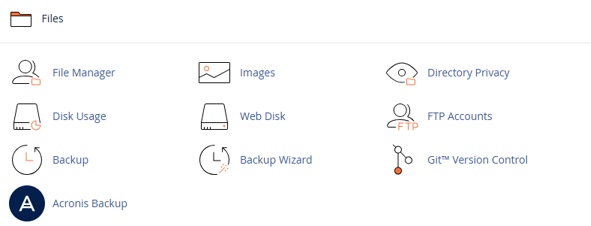
1. In the cPanel Dashboard, scroll down to the Files section and select File Manager a new browser tab will open to the right.
2. Click Settings and the Preferences pop-up window will display.
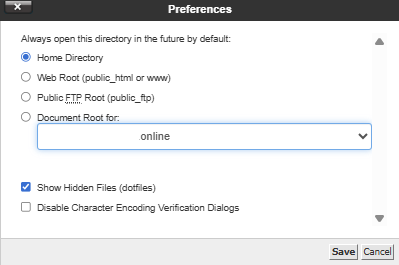
3. Tick the Show Hidden Files (dotfiles) checkbox and then click Save.
Part 2: Backing Up the ETC Folder & Files
4. Select the etc Folder and double-click the Domain Name Folder, which will be the domain to be backed up.
5. Click Select All and then click the Compress icon (far right of the top menu).
6. Select Zip Archive and Enter the name of the compressed archive in the text field below, changing the file name to “etc“. Click Compress Files.
7. Compression Results will display in the window, and you can click Close.
8. Right click the .zip file and download to your Local Drive in a backup-specific folder of your choice.
IMPORTANT:
Please note to ensure that the zipped file is named “etc”, as this is the reference we are using in this guideline, making it easier to follow.
Part 3: The MAIL Folder Backup
9. Select the Mail Folder on the left-hand side and double-click the Domain’s Folder that you are backing up.
10. Right click on the Admin Folder and select Compress.
11. In the opened window, select Zip Archive and Enter the name of the compressed archive in the text field, changing it to mail and then click Compress Files.
12. Download the new zip file to the backup-specific folder on your Local Drive.
Part 4: Backup the PUBLIC_HTML Folder
13. Select the public_html Folder, and as before click Select All, select Compress.
14. Select Zip Archive and Enter the name of the compressed archive in the text box and change it to public and click Compress Files.
15. Download the zip file to your Backup folder on the Local Drive.
Part 5: WORDPRESS SITES ONLY – In WP-CONFIG.PHP File Copy the Database Name
16. Right click the wp-config.php File under public_html Folder and select Edit.
17. Click the Edit button in the pop-up window.
18. Copy the Database Name and paste it into a Text document (e.g. Notepad, Notepad++) for referencing later.
Part 6: Export the Database
19. Return to the cPanel Dashboard (select the cPanel browser tab) and scroll to Databases and select phpMyAdmin.
20. Click the Database Name on the left-hand side.
21. Click Export on the top menu bar.
22. Leave the default Format: SQL.
23. Click the Export button.
NOTE:
Good practice is to include the date of the backup to the Backup Folder name. Ensure that regular backups are performed.
How to Restore Backup Files
Part 7: Restoring the .ZIP Files from a Backup Folder
IMPORTANT:
Before restoring a backup be aware that you will be overwriting ALL current existing files. It is therefore highly recommended that you perform another backup of the current data (even if it is corrupted) in the event that you need to refer back to it for whatever reason. It is also advised that you ascertain if it is relevant to restore all your backup folders or not. For example, it may be unnecessary to overwrite Mail, unless you are performing a complete website restore.
25. After logging in to your cPanel Dashboard, select File Manager in the Files section.
26. Click Settings and in the Preferences window tick the Show Hidden Files (dotfiles) checkbox and Save.
27. Select the etc Folder and click the Upload icon.
28. Select the etc .zip Folder Downloaded in Part 2 above.
29. Click the Go Back arrow.
30. You can either right click the zip file and select Extract, or you can select the zip file and click Extract in the top bar.
31. Click the Extract button in the window. Close the Extraction Results dialogue box.
32. Select the mail Folder and repeat the above process with the downloaded mail zip file.
33. Next follow the same process for the public_html Folder.
Part 8: Create a Database if Required
34. Go back to the cPanel Dashboard browser tab and select Database Wizard under Databases.
35. Copy the Database Name that you saved to Notepad in Step 18 above and paste it in the text field and click Next Step.
36. Under Create Database User, enter a Username and Save it to Notepad to access later.
37. Click Password Generator and save the Password to Notepad as well.
38. Click the checkbox: I have copied the password to a safe place.
39. Click Use Password then click Create User.
40. Tick the ALL PRIVILEGES checkbox and then Make Changes.
41. Click Return Home.
Part 9: Restoring the Database from the Backup Zip Folder
42. On the cPanel Dashboard, select phpMyAdmin under the Databases section.
43. Select the Database on the left and click Import on the top navigation bar
44. Click Choose File – select the Database ZIP File downloaded in Part 6 above. Click Import.
Part 10: Editing the WP-CONFIG.PHP File with the Created Database Details
45. Got to your cPanel Dashboard and select File Manager under the Files section.
46. Click on the public_html Folder in the left menu, right-click on the wp-config.php File and select Edit.
47. Click the Edit button.
48. Update the DB_NAME, DB_USER and DB_PASSWORD with the new details that you saved to Notepad.
49. Click Save Changes.
You have successfully Backed up and restored your website.
How to Backup a Website in cPanel Interface
This article assumes that you have already logged into your Hosted.com® Account and have accessed the cPanel Dashboard – refer below for steps on how to do this.
Download a Copy of the Backup
1. Under the Files section, go to Backup Wizard
2. Click the blue Back Up button
3. Select Partial Backup, and then click Home Directory
4. Once downloaded, click on Full or Partial Backup at the top
5. Click on the Backup Database shown and wait for it to download
IMPORTANT:
A full backup can ONLY be used to keep a copy on your server or desktop, or when moving your account to another server – it CANNOT be used for a Restore Back Up through the cPanel interface.
Restore a Backup File in cPanel
6. Under the Files section, go to Backup Wizard
7. Click the Restore button then Home Directory.
8. Click on Choose File and select the file from your device, and click on Upload
9. Once the restore has completed, click on Select Restore Type at the top
10. Click on Databases at the bottom left then click on Choose File, select the second file from your device, and click Upload.
11. In the Success message, copy the database name shown in between the double quotes
Restore a Backup in cPanel File Manager
12. At the top right, search for File Manager, and click on this option
13. On the far left, click on public_html then in the file list, right-click the wp-config.php file and choose Edit and Edit again
14. Paste the copied text into the single quotes after DB_NAME and DB_USER, replacing the old database name
15. Copy the password between the single quotes next to DB_PASSWORD then click Save Changes at the top right.
16. In your browser at the very top, navigate to the tab that reads cPanel – Backup Wizard
Create a New User
17. At the top right, search for Manage My Databases, and click on this option
18. Under Database Users > Add New User paste the copied password into both Password fields
19. In the Username field, referencing the database, only enter the part after the first underscore (if the database name is user1_user2_wp123, then ONLY enter user2_wp123)
20. Click the blue Create User button
21. On the new screen, click on Go Back and under Add User To Database make sure the User and Database match those created earlier, and click the blue Add button
22. Choose ALL PRIVILEGES at the top, and click on the blue Make Changes button
Additional Information
- Email Accounts: If your email is linked to the old domain, set up new email accounts for the new domain. You can migrate emails using cPanel’s Email Forwarders or Webmail export/import options.
- DNS Propagation: After updating nameservers or domain settings, allow up to 24 to 48 hours for DNS changes to propagate.
- SSL Certificates: Install an SSL certificate on the new domain to ensure secure browsing (HTTPS). cPanel’s AutoSSL can automate this.
- Search Engine Considerations: Use Google Search Console and other webmaster tools to notify search engines of the domain change.
- Backup Retention: Keep backups of the old domain until you are confident the migration is complete and fully functional.
- Common Pitfalls: Check for hard-coded URLs, broken internal links, or incompatible plugins if you’re using a CMS like WordPress.
Login to Hosted.com® Account
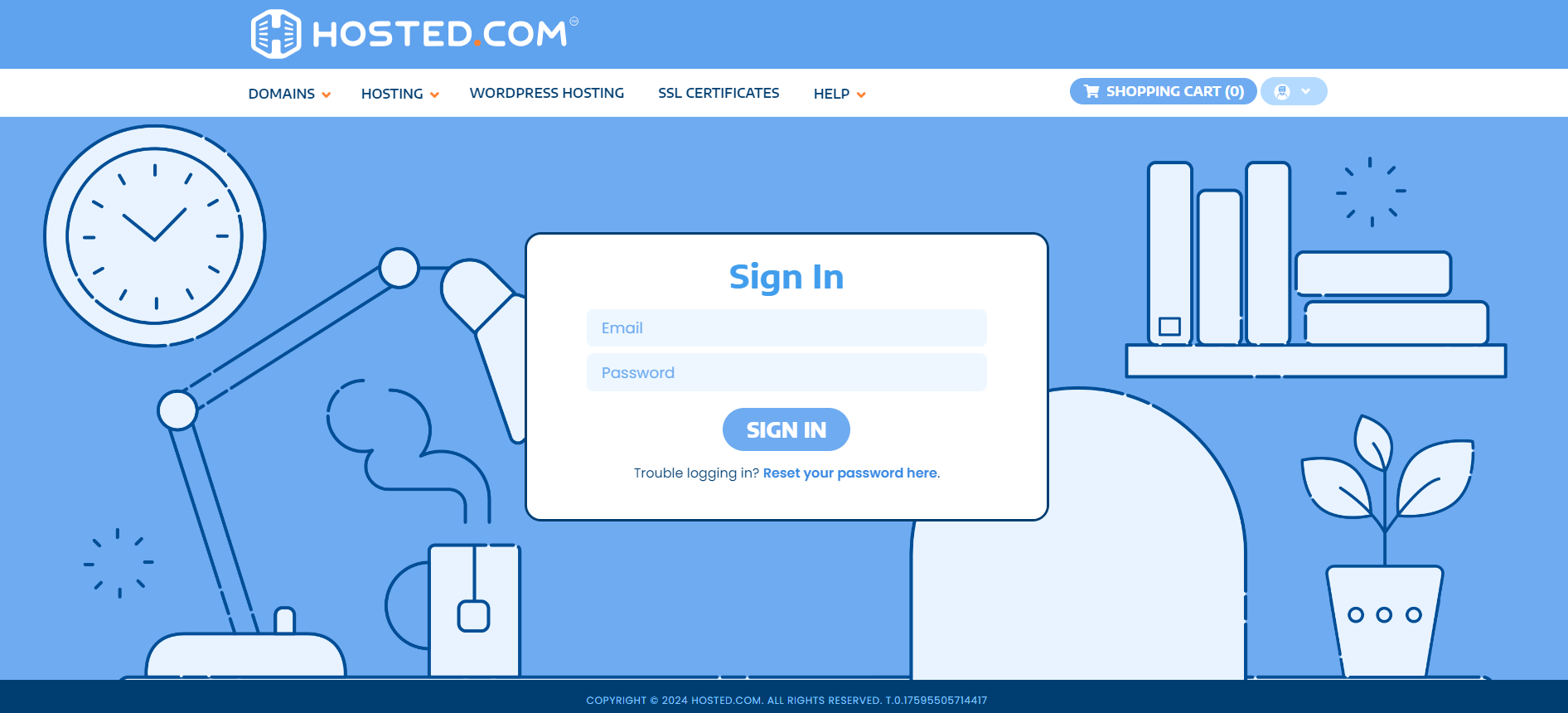
1. Go to the Hosted.com® website Account Login page.
2. Enter your Email and Password and click the Sign In button.
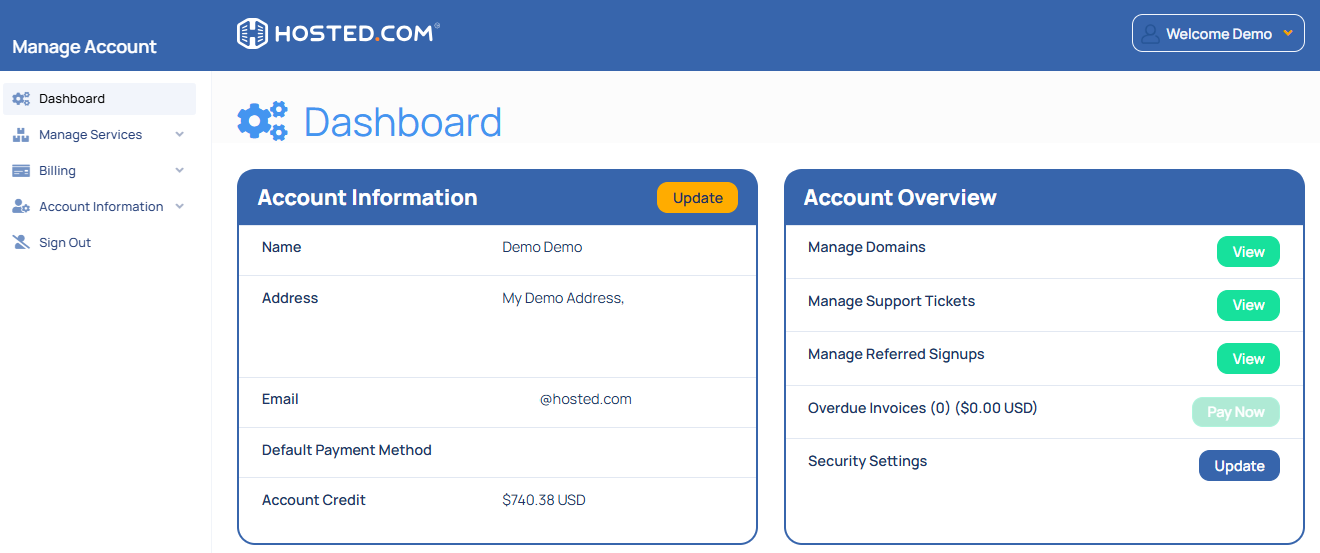
3. You will see the Hosted.com® Dashboard, displaying the Manage Account menu on the left and your Account Information, Account Overview and Open Support Tickets on the right.
Login to cPanel from your Hosted.com® Dashboard
4. Click on Manage Services to view the sub-dropdown menu and select the hosting package for the domain you want to work with – in our example we are using WordPress Hosting.
5. Click the Manage button to the right of the domain name you want to access.
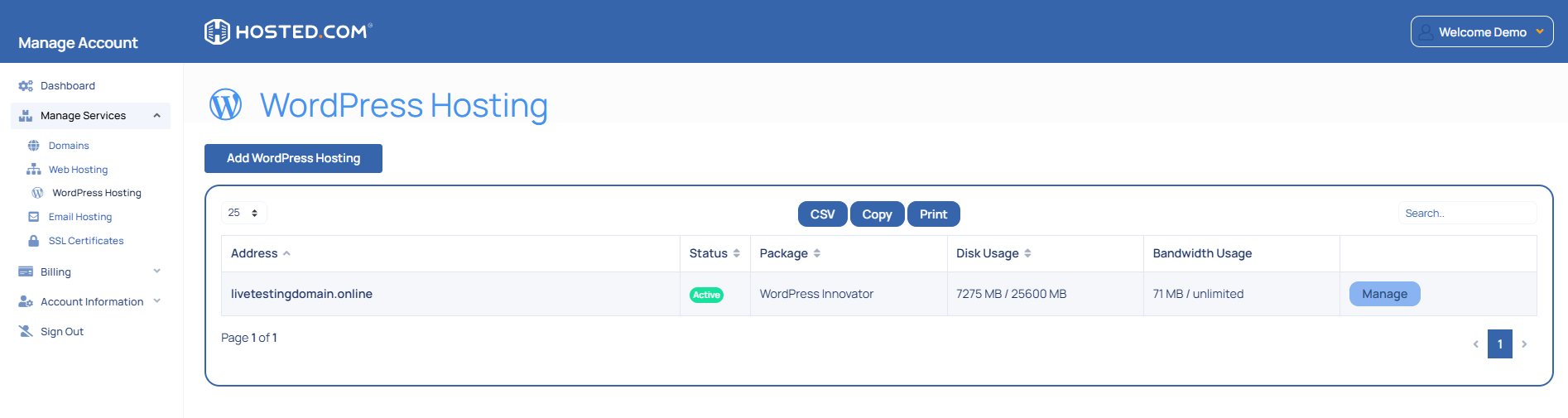
6. The display will now show Product Information, Quick Manage, Resource Usage and Site Statistics for that domain name.
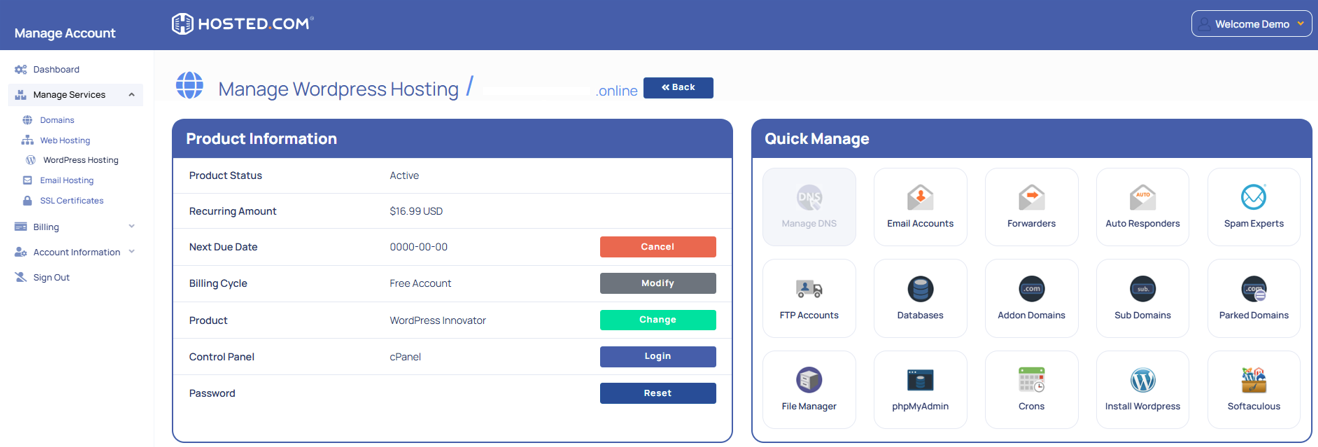
7. Under Product Information, scroll down to Control Panel, which will display cPanel to the right, and click on the Login button.
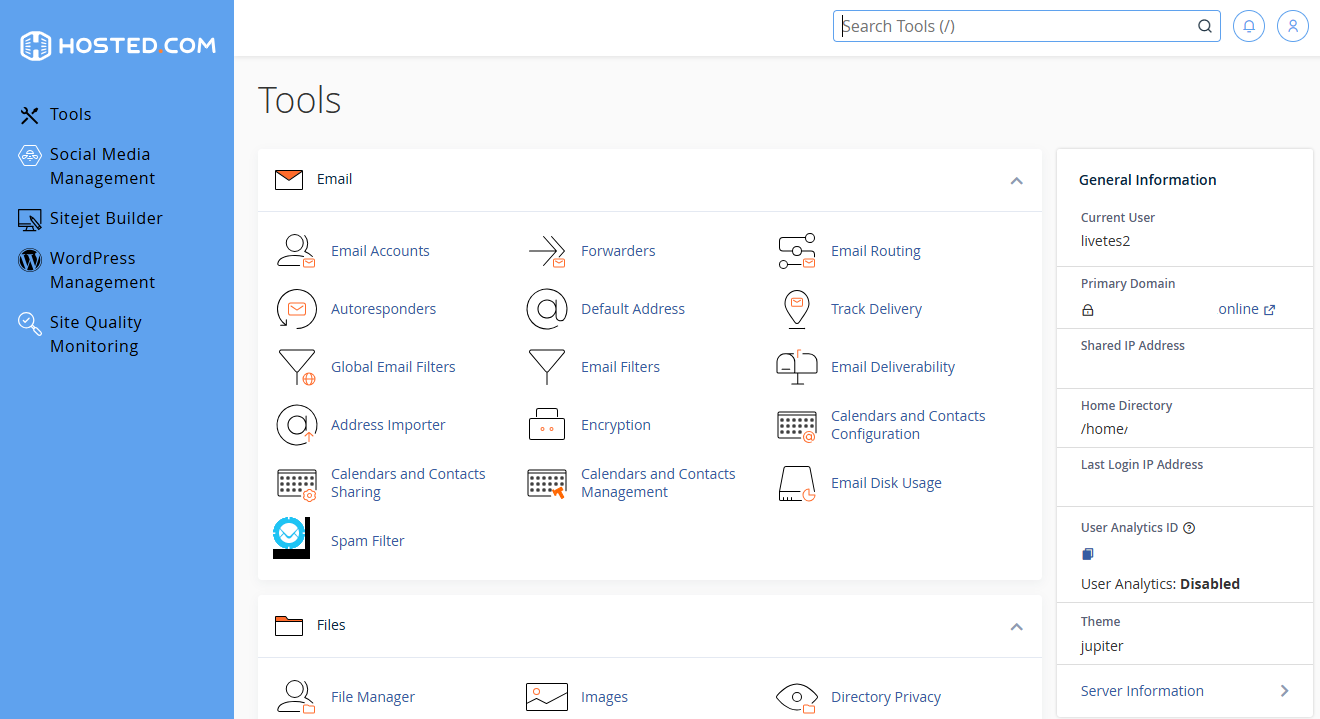
8. The cPanel Dashboard will now be di